FREE Horse Fly Guide
Free Guide to Horse Flies in the UK: What Every Horse Owner Needs to Know
We had reached proper summer (!) and I don’t know about you but my nemesis – the horse fly- is back with hideous vengeance here in Cornwall.
These summer pests cause such painful bites and frustration for horse owners and the horse. Their bites (and pursuits!) can turn a nice peaceful day in the field into an uncomfortable and explosive experience for horses, riders and yard staff alike. Yet despite their reputation, horse flies remain widely misunderstood, and their control is often mixed in with control of general stable flies. Many commonly recommended remedies lack scientific support, while some genuinely effective management strategies are often overlooked.
Horse flies (family Tabanidae) are large biting flies found throughout the United Kingdom. Unlike mosquitoes -which are bad enough- the female horse flies do not pierce the skin with a needle-like mouthpart. Instead, they use specialised cutting mouthparts that slice the skin before feeding on pooled blood (Urgh!) This explains why their bites are often immediately painful and may continue to bleed after the fly has departed.
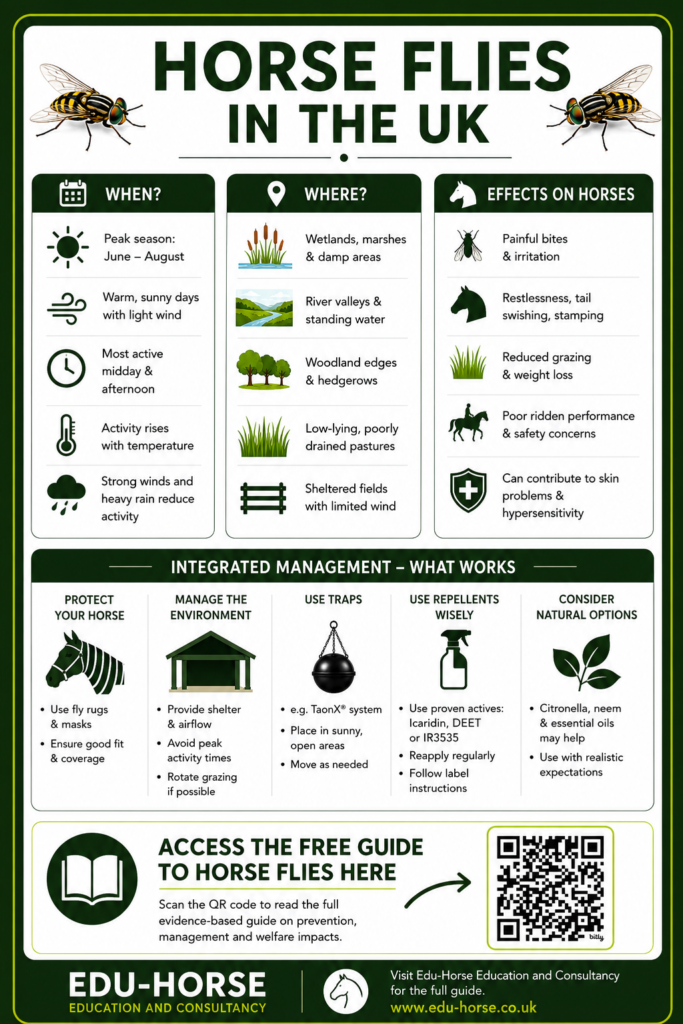
Horse flies are most active between late spring and early autumn, with peak activity typically occurring during June, July and August. Warm, sunny conditions with light winds favour activity (such as we have had with the recent hot weather) , while strong winds and prolonged rain generally reduce biting pressure.
The impact on horses extends beyond the bite itself. Repeated attacks can trigger tail swishing, stamping, skin twitching, head shaking and restlessness/rapid movement . Some horses spend less time grazing, seek shelter more frequently or become difficult to handle and ride. During periods of heavy horse fly activity, welfare and safety can both be affected- we’ve all had the reaction when riding or leading of horse fly bites on our horse.
Many owners search for a single solution, but research consistently shows that no individual product provides complete protection. Fly sprays, rugs, traps and turnout changes can all help. However, the most successful approach is an integrated management strategy.
I decided I needed to learn more about how I can help my horses (and me!) so put together this guide for the horse owner with as much information about horse flies and preventative strategies that can be implements- all backed by proven, published available research.
Successful horse fly control relies on understanding how these insects behave and combining multiple preventative measures. The full guide explores horse fly biology, welfare impacts, trapping systems, repellents, fly rugs, habitat management and the latest scientific research in far greater detail.
Want to learn more?
Read the full free evidence-based guide: Horse Flies (Tabanidae) in the United Kingdom: Prevention, Management and Welfare Impacts HERE